



About
Born in Genoa, Cristina Ricci Curbastro attended the Institute of Art for Ceramics in Faenza before completing a two-year specialization in plastic art. She graduated in sculpture from the Academy of Fine Arts in Bologna and began to exhibit her work from the nineties onwards.
Cristina is the great-granddaughter of the renowned mathematician Gregorio Ricci Curbastro (Lugo 1853 - Bologna 1925), whose work allowed Albert Einstein to arrive at his theory of general relativity. For some time now, she has been working on expressive forms that seem to conceal a "paradoxical union" with those structures elaborated using the scientific language of her illustrious great-grandfather, perhaps confirming the “indissoluble bond” of history and family.
The study of geometry and volumes have always accompanied her plastic art which, while embracing the timeless influence of the Bauhaus, has also come to fruition in interiors and design, with decidedly original and innovative results.
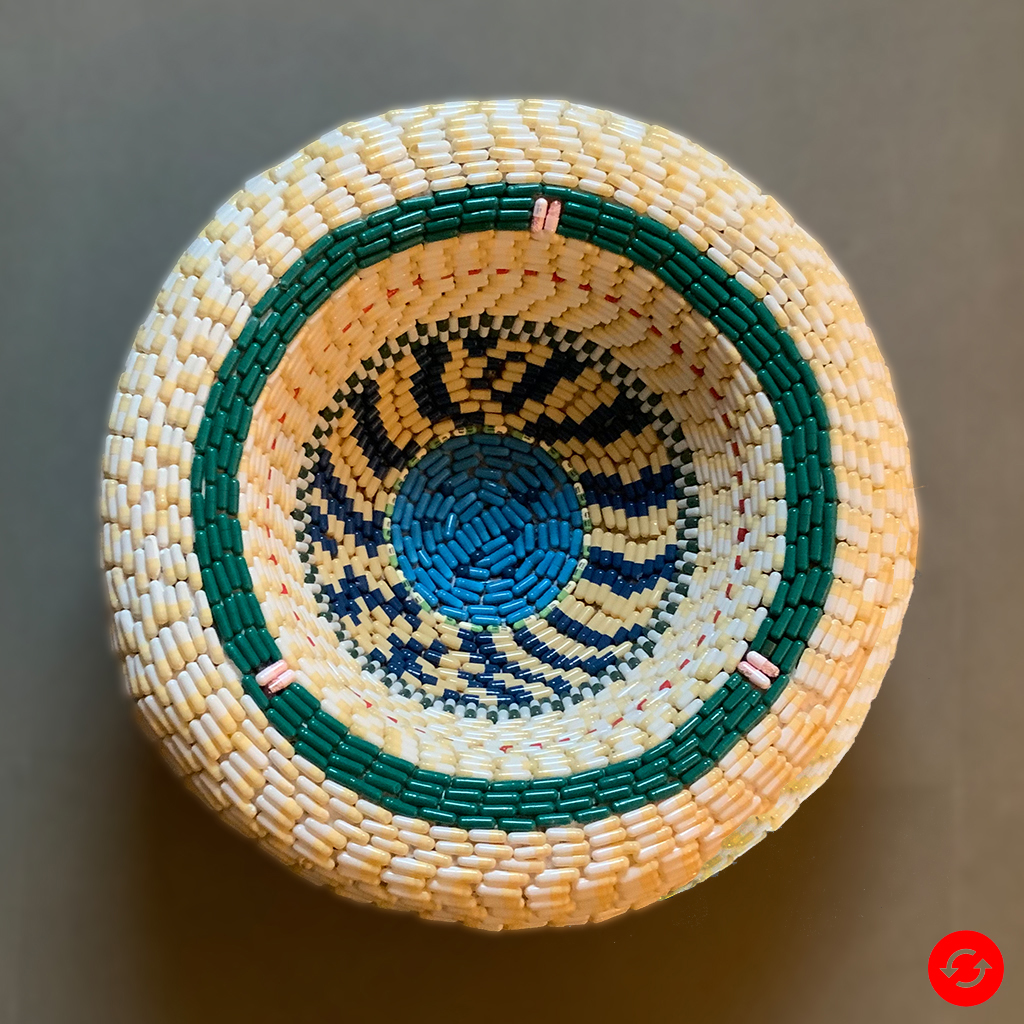
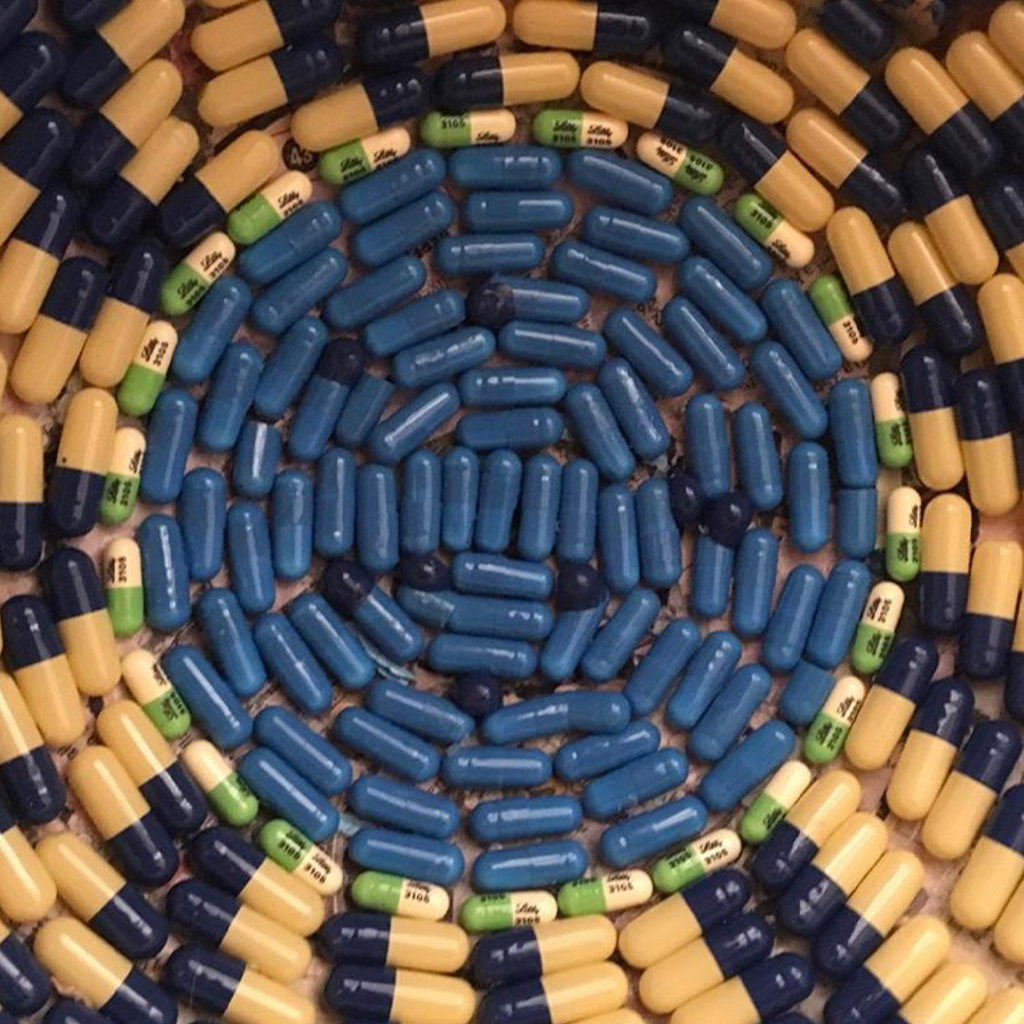
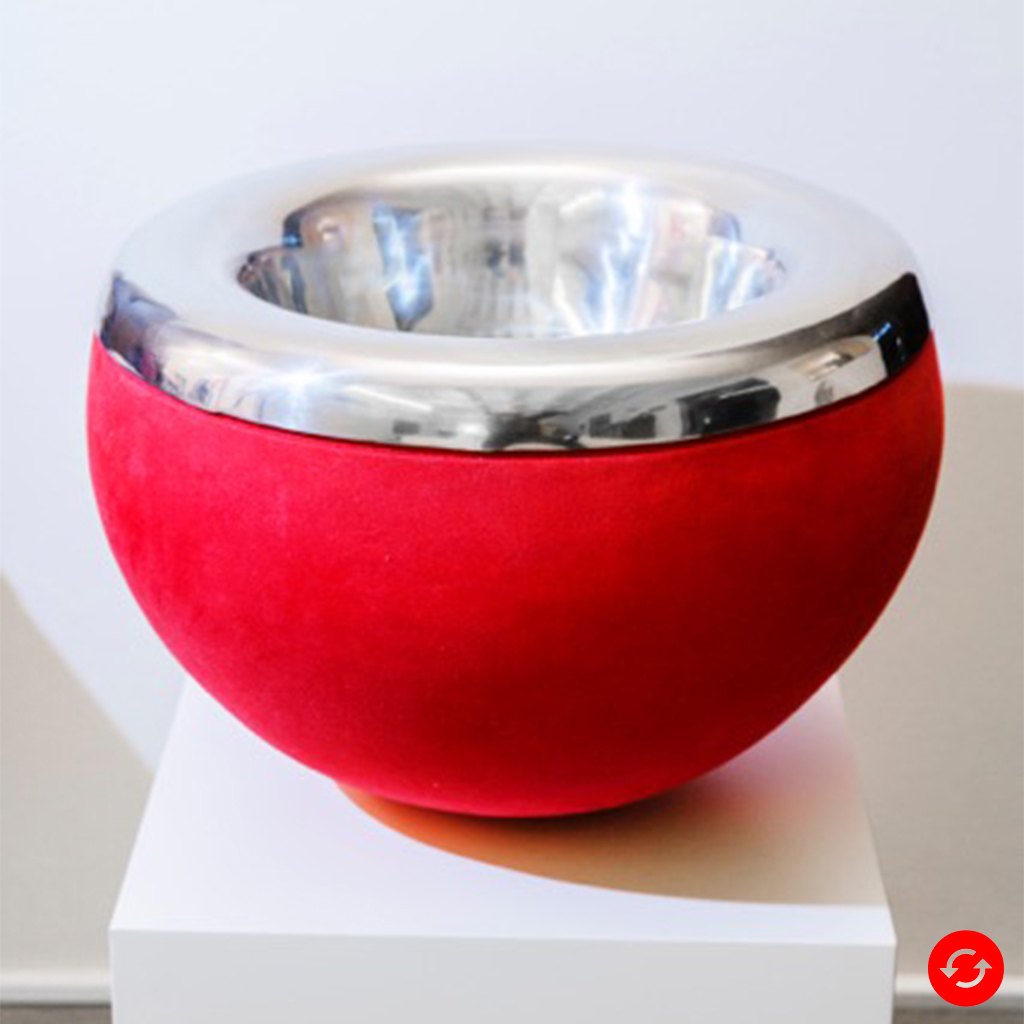
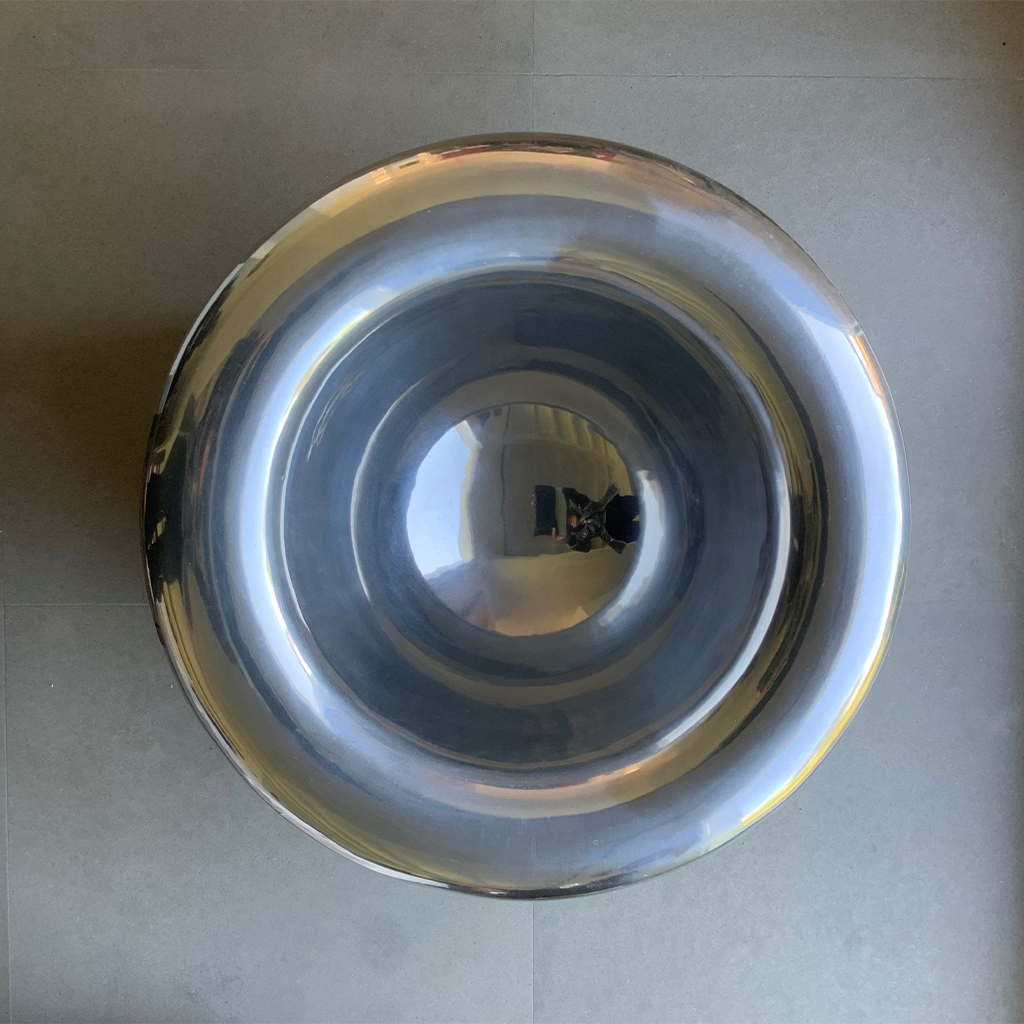
The spherical nature of Cristina Ricci Curbastro’s works conceals the drama of gestation within the playful appearance of their forms, under their smooth, polished surfaces. In this sense, drama must be understood as something that lives in the representation, that needs to be voiced, to be acted out.
All the sculptures seem about to explode, to oust what fills them, and, for the first time, to turn in on themselves. They are sculptures that draw on and relate to the generative, primordial body. The sphere contains an apparent calm but that round, immobile conclusion hides several other forms within it. Because there is nothing motionless, on the contrary there is an exhausting, infinite roundabout ...
... Perhaps the most emblematic work is Gianna. At first, cursory, glance it might seem like a design object: a container, an element that alternates convexity and concavity and which challenges the surface of the support beneath with its precarious spherical balance. Yet upon closer inspection, this work is a concentric embroidery of psychotropic drug capsules, a vortex of added and subtracted dosages, in the certain mathematics of therapy. The questions pile up, they follow one another: Whose pills were they? What effect did they have? The artist gives the answers, in that sharing of a private space that often characterizes those who make art: the tablets belonged to a person close to her, and the treatment was lost in an obsessive, inconclusive plural. How anomalous is Maternità riflessa (Maternity reflected), which arises from a combination of diverse materials and different colors: the cold, glassy gray of aluminum and the "velvety red" ceramic. A flipped maternity, an inverted maternity, in which one is mirrored and deformed at the same time.
Her set of navels draw different compositions depending on the setting, representing a search for the instant when everything is born. As if life were a huge uterus, perpetually ready to be fertilized.
Cinzia Bollino 2016
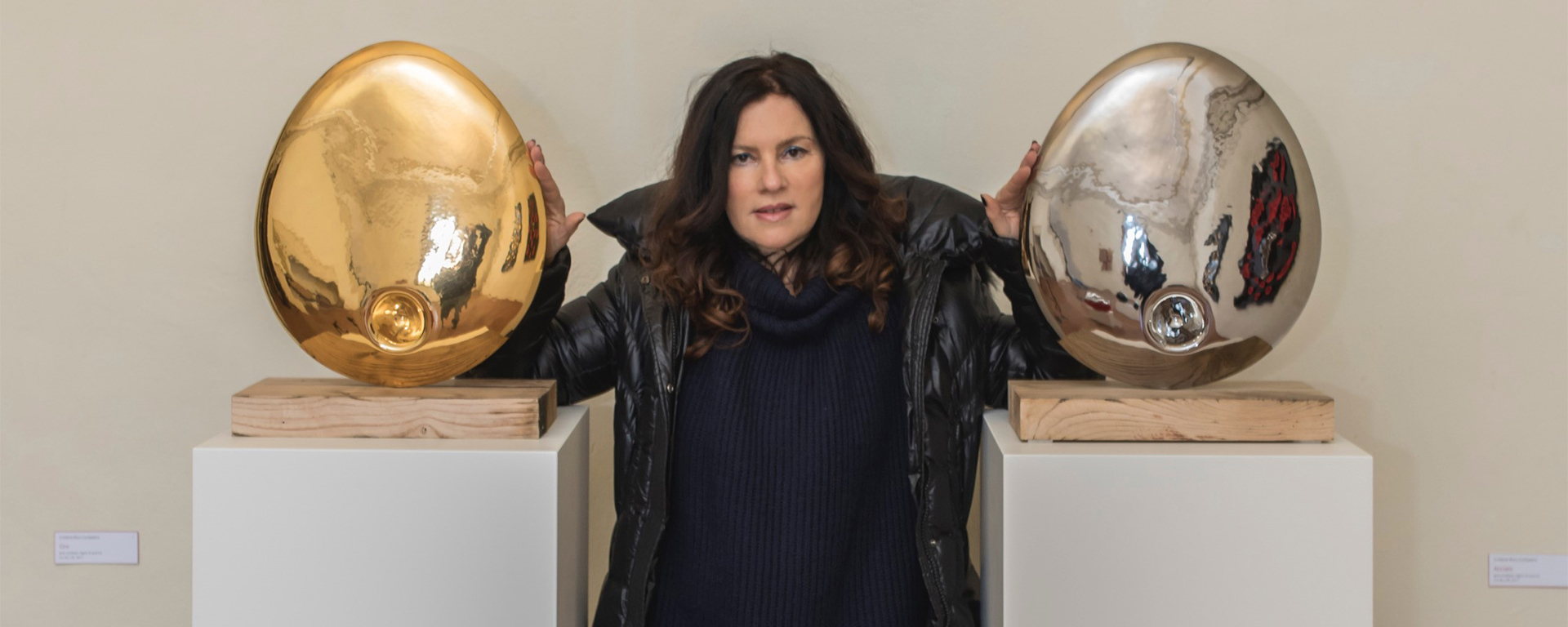
Oro
Oro (Gold) and Acciaio (Steel) represent a kind of diptych built around the artist's cult image of the universe, the circle, which in this case comes out of its static perfection to take on an oval shape. Made of glazed stoneware ceramic in pure gold and platinum, set on an oak base, they celebrate a sort of genesis of the cosmos, a primordial reality from which the multiplicity of beings develops. The egg, understood as an origin and as a mother, encapsulates the principles of good and evil: life that breaks the shell and expands, inevitably following its own path.
The dualism of good and evil is reinforced by the two-tone scheme of the works, which plays on the haptic sensation of warmth (GOLD) and cold (STEEL), made even more vivid by the shiny, mirrored surface in which the viewer is reflected. Then, in the hollowed bases, we can detect the hypothetical navel that binds every creature to its mother, a tangible sign of belonging but at the same time of overt detachment and freedom.
In Maternità introflessa (Maternity inverted), a large dark vase lends itself as a uterus, lit up in the center by a small luminous sphere. The sculptor once again suggests the theme of the generative body, the spark of life destined for the incessant transformations that preside over and govern existence itself.
Lorena Gava 2018
Cristina Ricci Curbastro is a sculptress capable of "lightening" even the prickliest and most dramatic of themes. A “calligraphic” circularity seems to characterize many of her works, which present themselves beyond time.
While aware that a work of art can only speak for its own time, even though we are often blind to the one we are living through, Gianna is the work that becomes the narrative of the self and constitutes a link with the other works (…).
Chiara Settefondi 2018
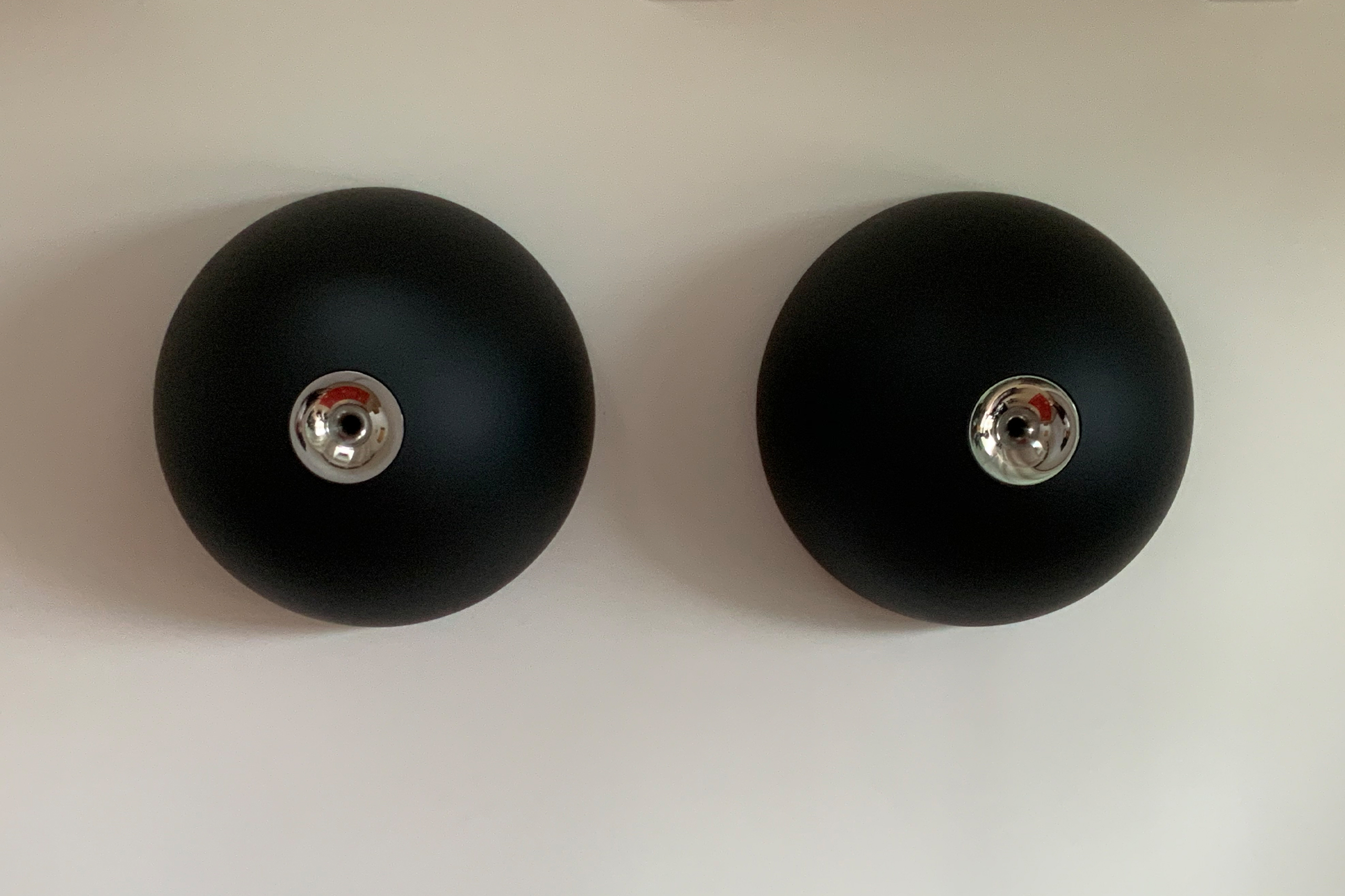
No milk
This is a sculpture / installation. Two hemispheres covered with a black rubbery layer represent two large breasts with steel nipples made like a funnel and inverted.
Looking at these shapes you have a feeling of softness and you hear the lullaby: “Ninnananna ninnao, questa bimba a chi la do, gliela do all’uomo nero che la tenga un anno intero..”, ("Hush little baby, who shall I give you to, I’ll give you to the bogeyman who’ll keep you for a whole year .."), a terrible rhyme made even more bloody by the 'intermittent emission of a black liquid (at a safe distance from the viewer) coming from a mechanical device inside the nipples.
This mother's milk is a “black milk”, a visual and tangible metaphor of death, the total absence of nourishment or any positive or stable affective bond. This work documents the expressive work of the artist, who has spent years exploring motherhood in all its aspects, including the most tragic and disturbing.
Lorena Gava 2020
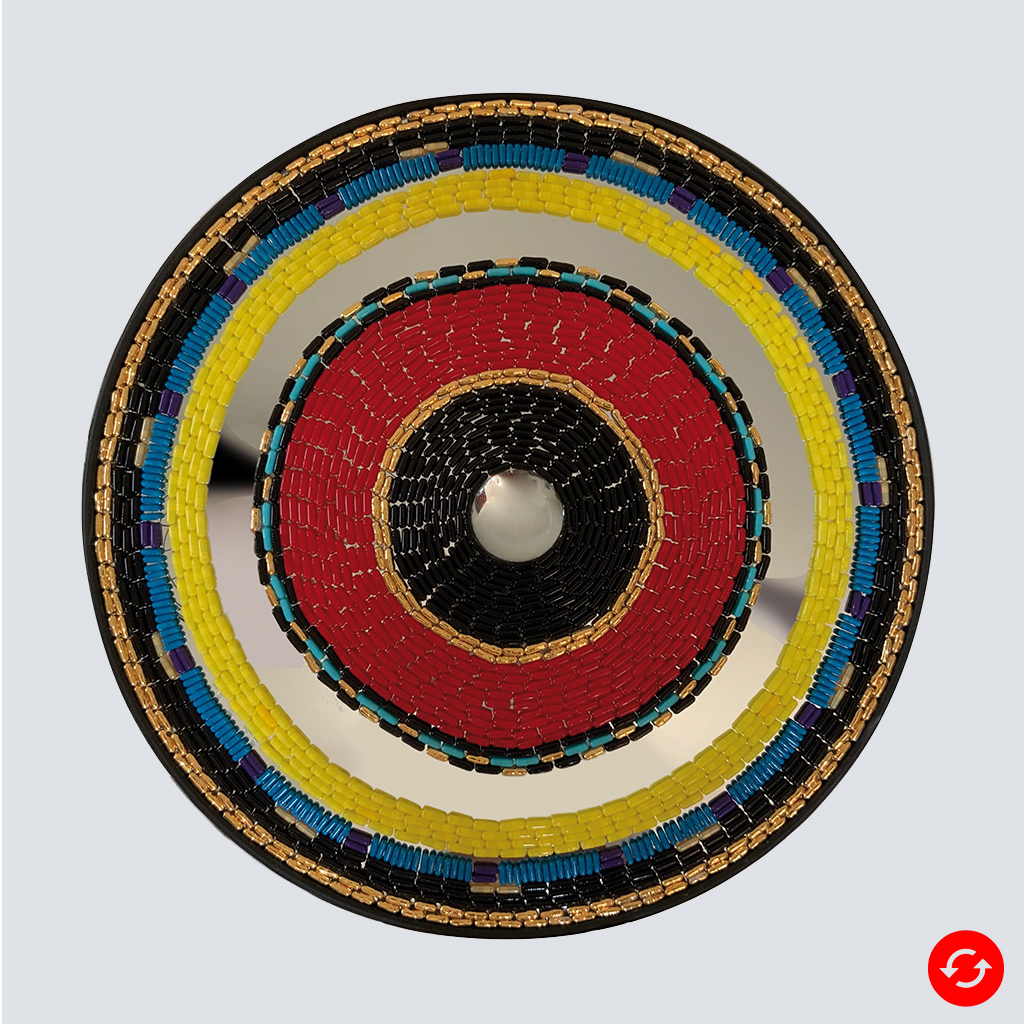
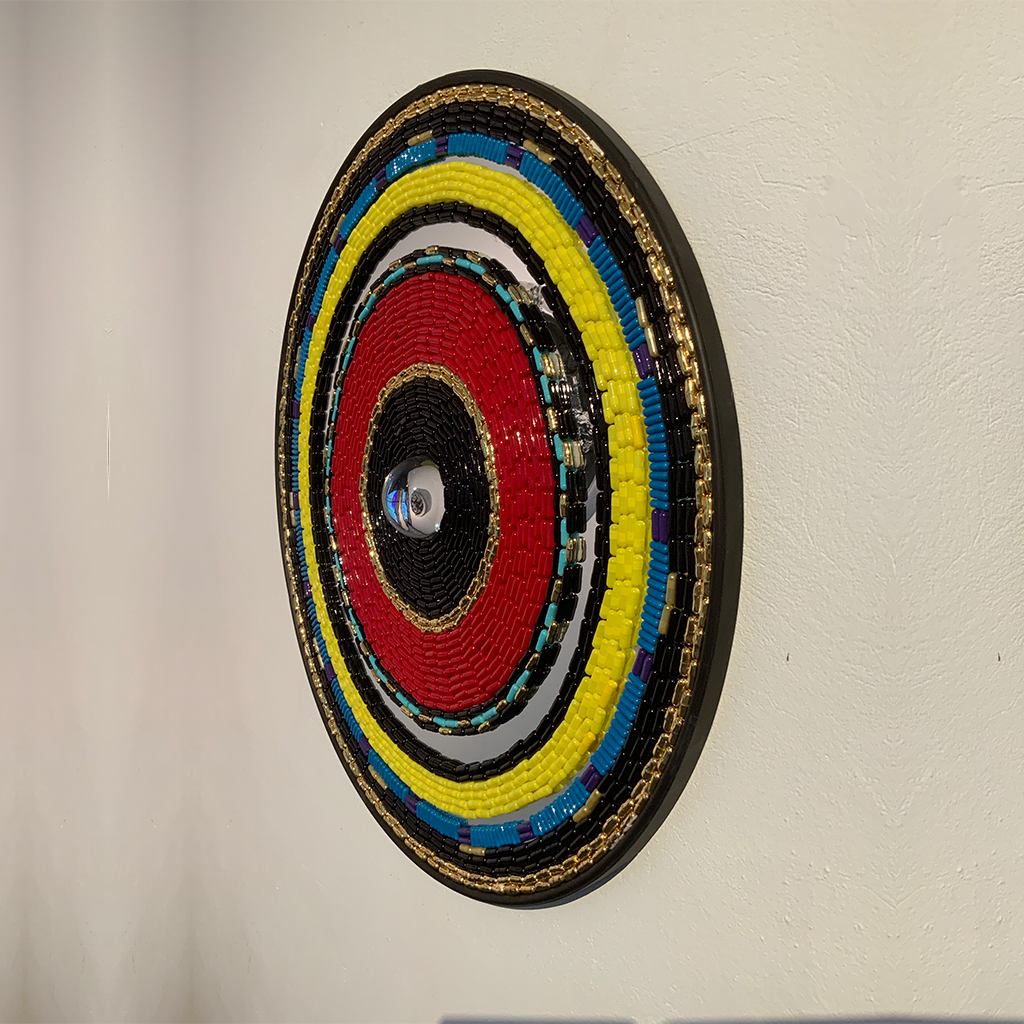
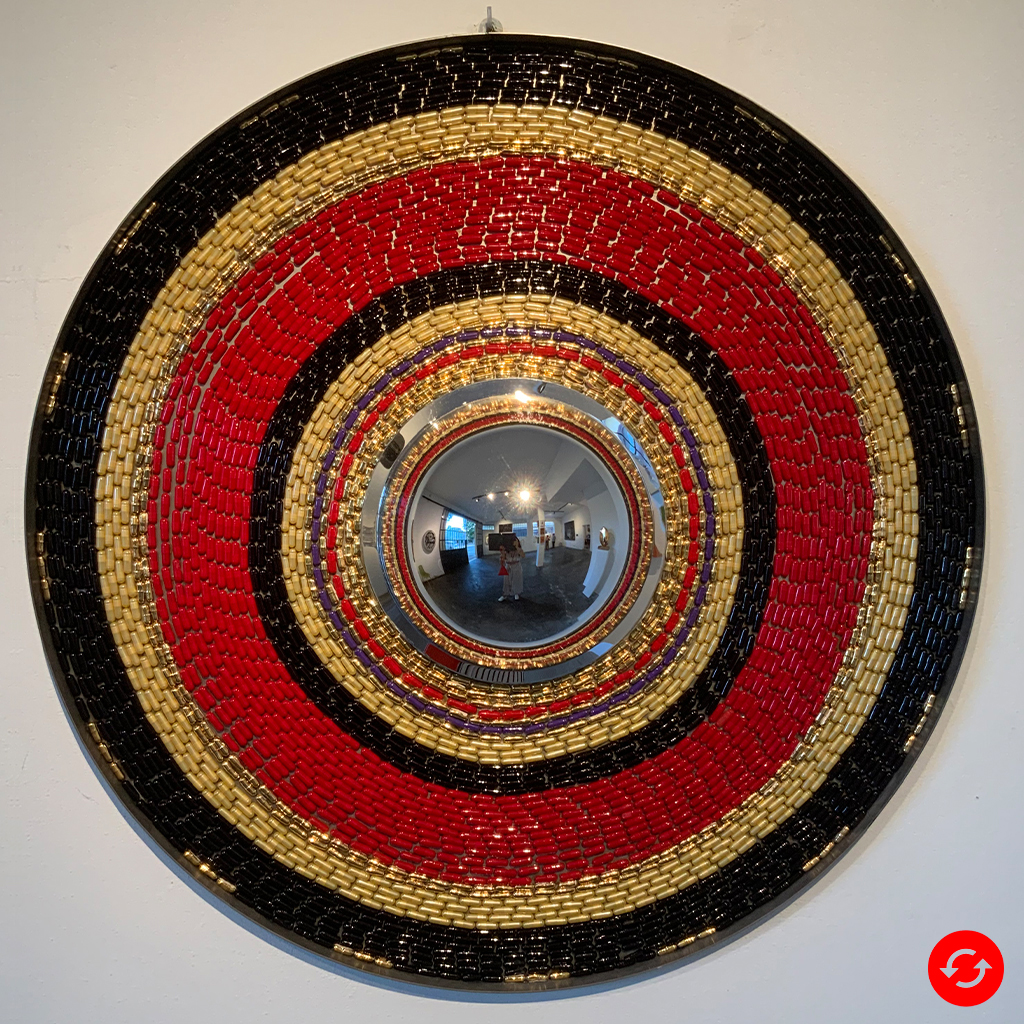
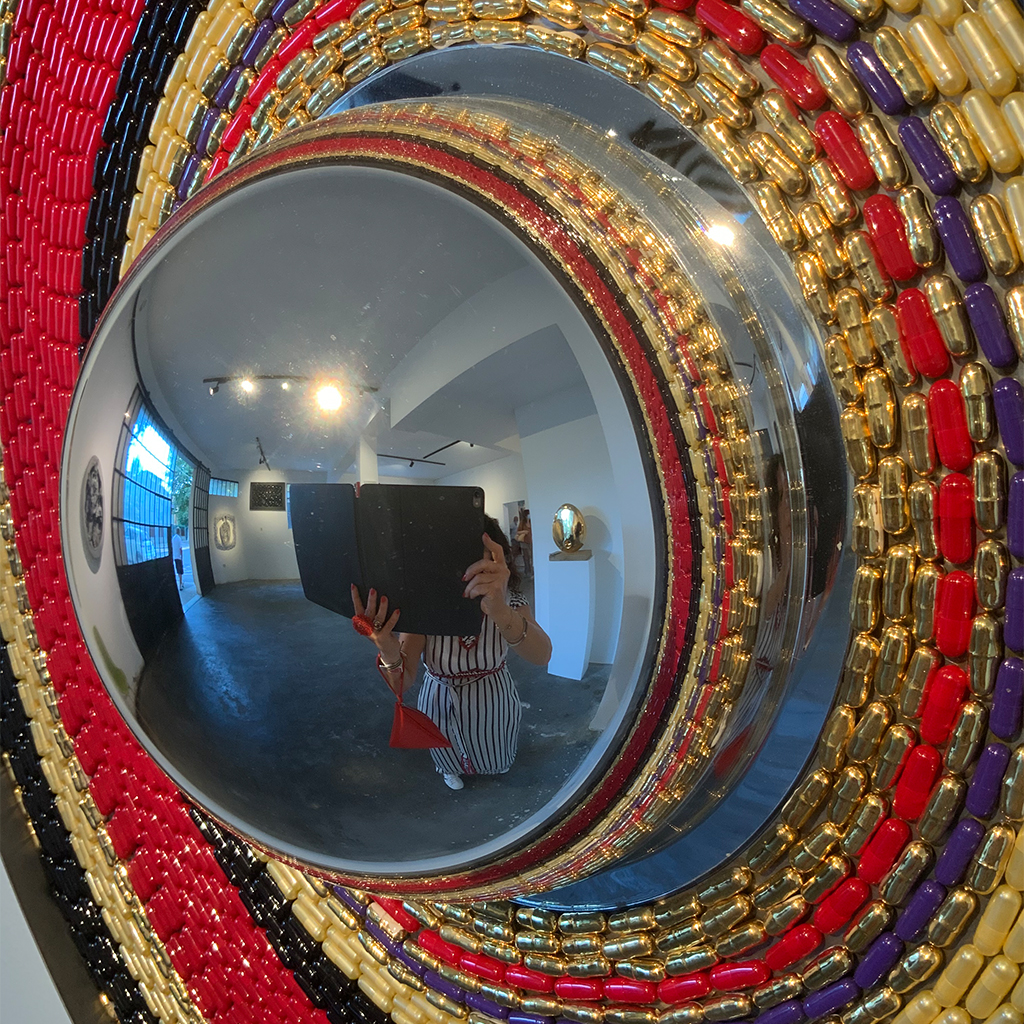
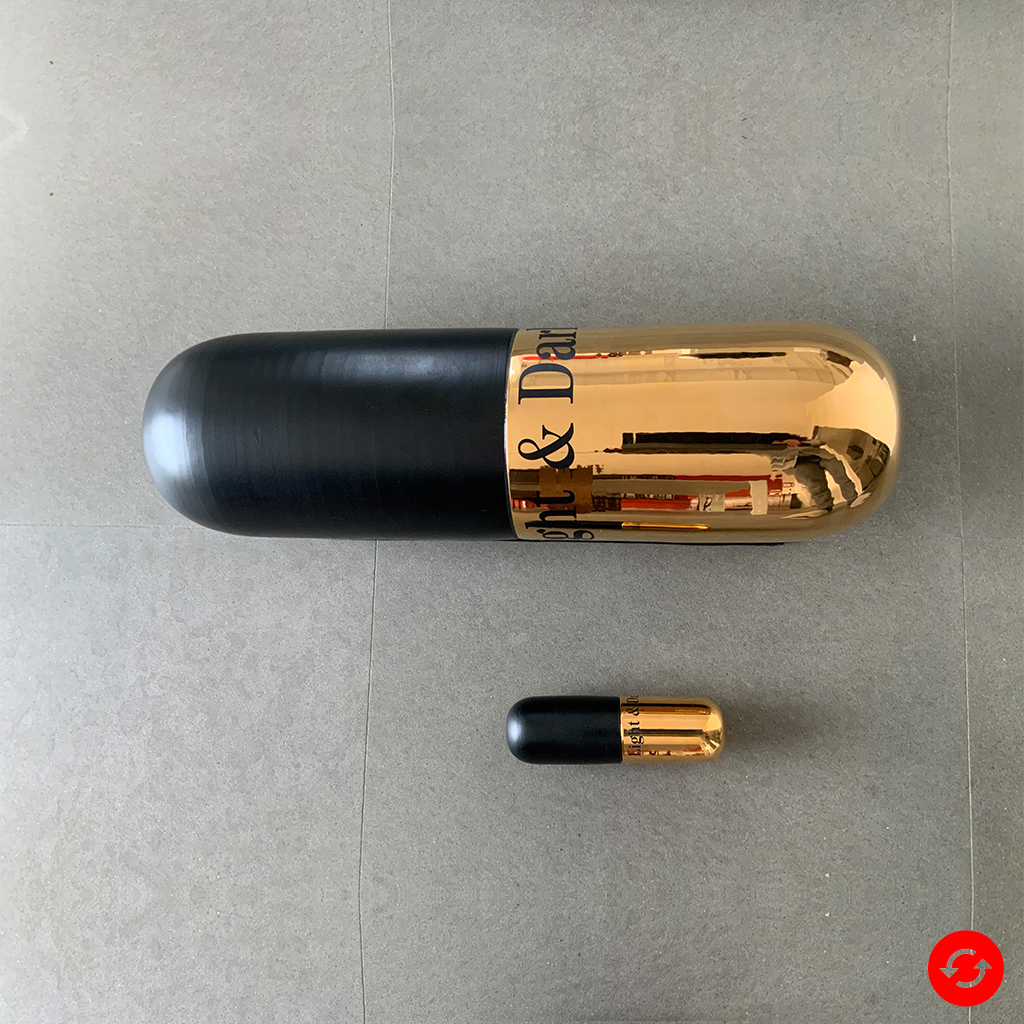
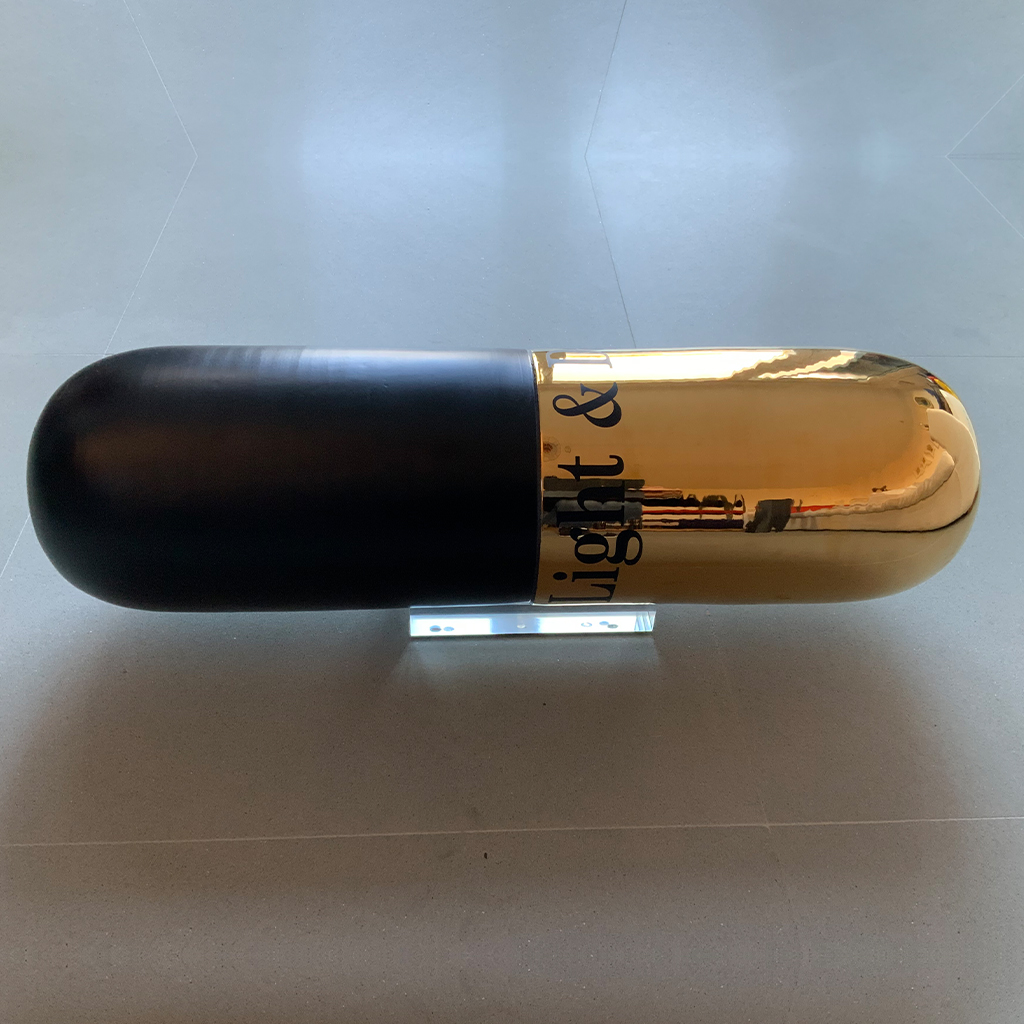
Bersaglio (Target) 1995-1998, Bersaglio (Target) 1995-2002 e Light &Dark
Are works that the artist created during the spring 2020 lockdown. Remarkable for their size and compositional precision, they once again confirm Cristina Ricci Curbastro's obsessive work surrounding circular shapes that delimit and enclose a space.
The title Target justifies that sort of magical perimeter created by the coils of shiny, colored capsules that catch the eye. As hypnotic and magnetic as a mandala, the center of the Targets engulfs us through the deception of a magnifying glass in one case and a mirror in the other. These are always reflective and deforming surfaces that testify, through the sensation of perceptive vertigo, to a condition of discomfort and instability. Entering "physically" into the work refers, in addition to the acclaimed lesson of certain poor art, Pistoletto in the first place, to a desire for a performative, engaging action, which the artist is so keen on and can be seen in many of her previous works. As for the rigorous and maniacal arrangement of the capsules in concentric circles, we are gladly reminded of the ancient Byzantine mosaic technique or the Cosmatesque marble inlays, the latter based on the repetition of ornamental motifs in which light and color play a fundamental role. Cristina Ricci Curbastro entrusts gold, red and black with the task of narrating the changing moods and sudden passages that punctuate euphoria and depression, excitement and distrust.
While in the 2015 work "Gianna" the embroidery of capsules alluded to the spherical nature of the mother's body, in "Bersagli" it becomes the materialization of a cyclical sense of time that, even under pressure, never ceases to pursue calm and balance. Just as the rose windows of Gothic cathedrals were believed to have saving powers due to the thaumaturgical qualities attributed to polychrome light, so Cristina Ricci Curbastro’s “Targets” embody the desire for an ancient yet at the same time very contemporary catharsis. The same "therapeutic" function seems to accompany the work "Light & Dark", a totem-tablet that in its polarity of dark and light is intended, ironically, as a sort of gigantic panacea for the ills of every time and of every personal or collective condition.
Lorena Gava 2021